When HBO said they were coming back to Westeros again, the reaction was uncertain. After all the Game of Thrones series put viewers through, and after House of the Dragon showed us how intense this world still is, viewers just weren’t sure what to feel about A Knight of the Seven Kingdoms.
And then the show landed.
No dragons blazing across the sky.
No throne politics in the first five minutes.
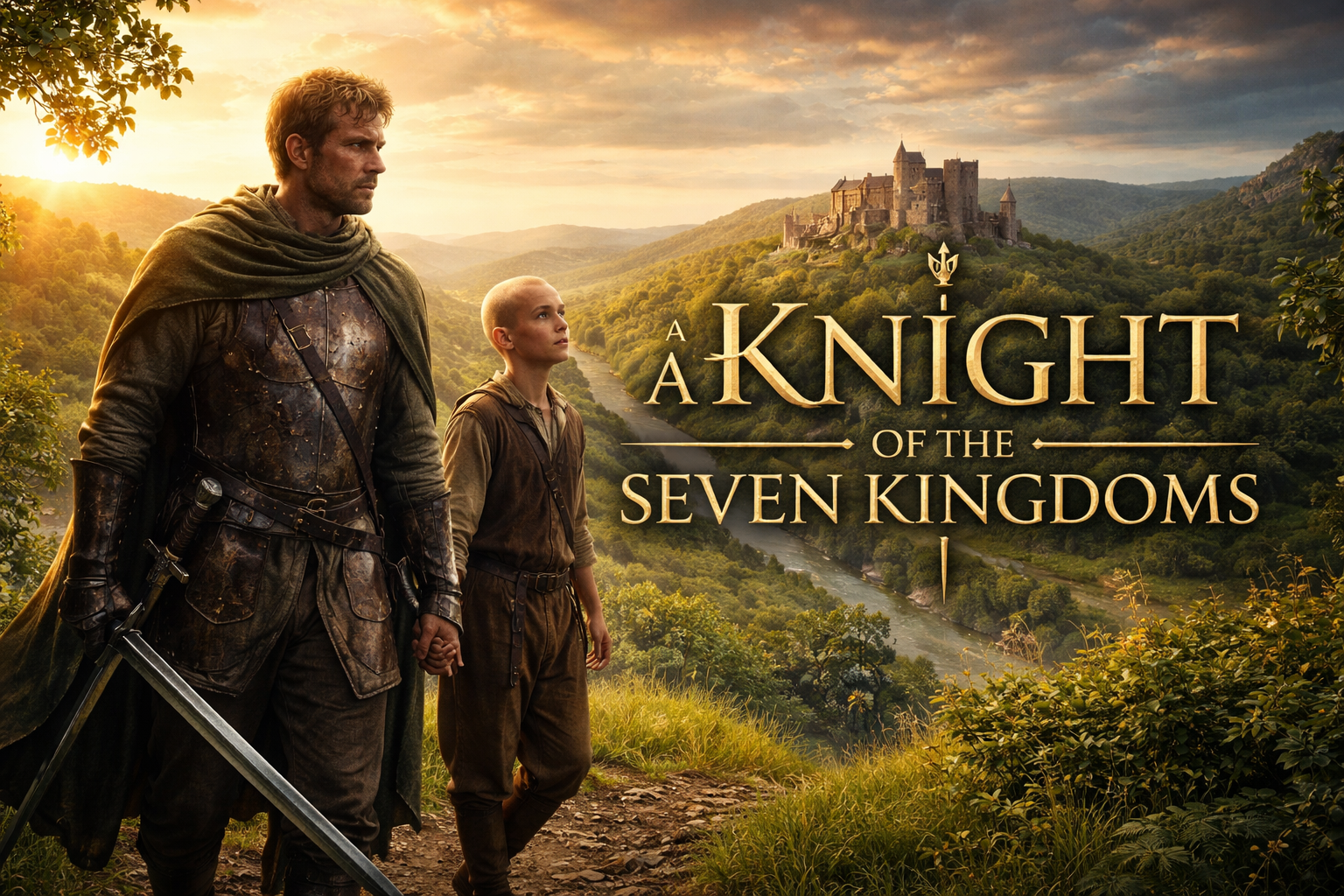
Just a very tall knight, a very small boy, and a dusty road ahead of them.
That alone makes this series worth watching.
Because A Knight of the Seven Kingdoms isn’t trying to shock you into watching, it’s trying something much harder: it wants you to care.
A quieter return to Westeros, and that’s the point
A Knight of the Seven Kingdoms takes place about a century before Game of Thrones, and it’s based on George R. R. Martin’s Dunk and Egg stories, starting with The Hedge Knight. It follows Ser Duncan the Tall, Dunk to those who know him, and his young squire, Egg, who is very clearly not what he seems.
This would be a “side story” in another series. This is the whole point.
Unlike Game of Thrones, which relied on scope and shock, or House of the Dragon, which sustains itself on family drama and spectacle, A Knight of the Seven Kingdoms is a small, personal show. It’s about honor when you have no power. It’s about kindness when cruelty is the easier choice. It’s about survival without prophecy.
This change in tone may be the best thing HBO has done for this franchise in years.
Why early viewers are tuning in
Within days of its premiere, viewership data revealed something significant: fans didn’t just dip into the series; they stuck around. That’s no longer a given, especially in the streaming age, where attention spans are fleeting.
What’s drawing viewers in is more than nostalgia. Dunk feels authentic. He’s not a genius. He’s not a politician. He’s trying to live up to an ideal that the world is constantly mocking. Egg, the quick-witted and observant member of the duo, is watching everything and asking questions that challenge the social hierarchy of Westeros.
The casting that quietly sells the story
Peter Claffey’s Dunk doesn’t act like a traditional hero. He’s uncertain. He’s error-prone. He gets things wrong and has to live with it. This makes him more relatable than most Game of Thrones-style protagonists.
Dexter Sol Ansell’s Egg, on the other hand, has just enough swagger to suggest what’s to come without ever tipping its hand to the audience. The show is confident in its viewers to piece things together themselves, and this allows the actors to actually act.
The chemistry is earned, not manufactured, and that’s what makes it so effective.
Why this show might age better than its predecessors
Here’s the thing about epic television: sometimes bigger isn’t better, and it certainly isn’t longer.
Game of Thrones was a cultural phenomenon, but it also had a short shelf life. Whole seasons were devoured, dissected, and discarded in a matter of weeks. House of the Dragon dialled up the intensity, but it’s still a slog.
A Knight of the Seven Kingdoms takes a different approach.
It’s the type of show people come back to. The type of show that’s shared by word of mouth rather than by spoilers. The type of show you recommend, with the caveat, “Just watch the first episode, you’ll understand what I mean.”
This is important if you want a show to last.
George R. R. Martin’s shadow, and why this time feels different
Any discussion of a Game of Thrones spin-off will eventually circle back to this question: What happens when the books run out?
This series has a distinct advantage. The Dunk and Egg tales are more contained, and Martin has been very much involved in this adaptation. There’s also less need to keep ratcheting up the tension. Not every season needs to end in a war.
This creative breathing room may be the biggest gift the franchise gives itself.
Rather than hurtling towards spectacle, the series can develop its characters. Rather than one-upping the last disaster, it can linger with the aftermath.
The gamble HBO is making, and why it may pay off
Let’s face it: A Knight of the Seven Kingdoms will never be the pop culture phenomenon that Game of Thrones was in its early days. It doesn’t have the same shock value. It doesn’t strive to be the trending topic every Sunday night.
However, success no longer has to be about domination.
In the current television culture, the key to success is longevity. A show that fosters loyalty, not just hype, is worth far more than one that ignites and then implodes.
This show gets it.
But is A Knight of the Seven Kingdoms the next big hit in the GoT universe?
Yes, but not as you think.
It’s not bigger.
It’s not louder.
It’s not more violent.
It’s more consistent.
A Knight of the Seven Kingdoms is a success because it recalls what the franchise nearly forgot: Westeros is interesting, not because of dragons or crowns. It’s interesting because of the common people trying to remain decent in an indecent world.
And if this show continues to put faith in its characters and its audience, it may not be the next success story in the GoT universe.
It may be the one that lasts the longest.
This is just one story that is currently playing out. Click here to see more trending stories that are worth your time.